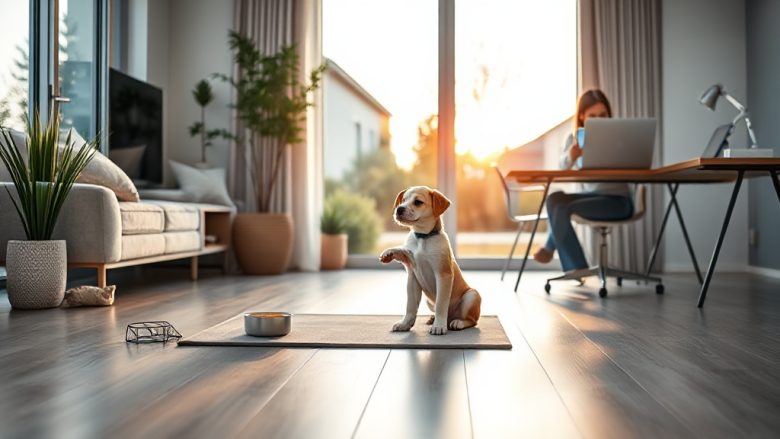
Before you teach a single command, set the routine. That sounds backwards, but it’s the thing most first-time owners skip, and it’s why training stalls by week three. Puppies learn through repetition tied to a predictable schedule, not through long sessions. If you work from home, you already have the best setup for this: short bursts spread across the day, with real breaks in between. This plan covers eight weeks, built around a normal workday, so you can train a puppy at home without turning your calendar upside down.
One honest note before we start. Eight weeks gets you the foundations, not a finished dog. You’ll have a puppy who sleeps through most of the night, knows four or five cues, and can handle the world without panicking. That’s a genuinely good place to be.
Before Week One: Set the Daily Rhythm
Pick fixed times for feeding, toilet breaks, naps, and play. Write them down. Puppies have small bladders and short attention spans, so the schedule does most of the work for you.
A workable pattern looks like this: wake, toilet, breakfast, toilet, then a short play session. Nap. Toilet. Train for three minutes. Nap. Lunch and toilet. Nap. Train for three minutes. Play. Dinner and toilet. Wind down. Toilet right before bed.
Notice the pattern. Toilet breaks come after every meal, every nap, and every play session. That’s not excessive; it’s how house training actually sticks. Take your puppy out on a lead to the same spot every time, stand still, and wait. When they go, mark it calmly and reward. No party, no fuss. Too much excitement and they’ll forget what they just did.
Set up a crate or a small pen near where you work. This isn’t a punishment zone. It’s a safe space where the puppy can nap while you’re on a call. Feed meals in there, toss treats in at random moments, and leave the door open when you’re nearby. By the end of week one, the crate should feel like the best room in the house.
Weeks 1 and 2: House Training and Name Recognition
Your two goals here are simple. Get more toilet trips outside than inside, and teach the puppy that their name means good things happen.
For the name, say it once in a cheerful tone, and the moment the puppy looks at you, reward. Do this ten times a day in different rooms. Don’t repeat the name if they ignore you. Wait, try again later, and make the reward worth turning around for. Within a few days you’ll have a puppy who snaps to attention when you speak.
House training is mostly about supervision and timing. If you can’t watch the puppy, they’re in the crate or pen. If they’re loose, your eyes are on them. Watch for circling, sniffing the floor, or suddenly leaving the room. That’s your cue to scoop them up and head outside.
Accidents will happen. Clean them with an enzymatic cleaner, not a regular household spray. Normal cleaners leave behind a scent that says “toilet here again.” Don’t scold. The puppy won’t connect your frustration to something they did two minutes ago, and it just makes them nervous about going in front of you.
By the end of week two, aim for these milestones:
- Puppy responds to their name most of the time
- Toilet breaks happen on a fixed schedule with fewer indoor accidents
- Crate is accepted without whining for short periods
- Puppy can settle for a few minutes while you work nearby
Weeks 3 and 4: Sit, Down, and the Start of Socialisation
Now you can layer in cues. Keep sessions to three minutes, twice a day. Short and frequent beats long and tiring every time.
For sit, hold a treat just above the puppy’s nose and move it slowly back over their head. Most puppies sit naturally to follow it. The moment their bottom hits the floor, say “sit” and reward. Repeat five times, then stop. Don’t drill it. You want the puppy ending the session wanting more.
Down follows the same logic. From a sit, move the treat from the nose down to the floor and slightly away. When elbows touch the ground, mark and reward. Some puppies get this in one session; others take a week. Both are normal.
Socialisation is the part people rush, and it’s the part that matters most. The window where puppies are most open to new experiences closes somewhere around sixteen weeks, so weeks three and four are prime time. But socialisation isn’t about meeting every dog in the park. It’s about calm exposure to everyday things.
Carry your puppy around the block. Let them hear traffic, see wheelie bins, watch people with umbrellas. Sit on a bench outside a shop and just watch the world go by for ten minutes. Reward calm behaviour with treats. If the puppy looks worried, increase the distance and try again later. Never force an interaction.
At home, run your hands over their paws, ears, and mouth while feeding treats. This makes vet visits and nail trims far easier down the line. Invite a couple of calm, vaccinated adult dogs over if you can. A steady older dog teaches manners faster than any human can.
Weeks 5 and 6: Recall, Lead Walking, and Leaving Alone
Recall is the cue that could one day save your puppy’s life, so build it carefully. Start indoors with no distractions. Say your puppy’s name followed by “come” in a happy voice, then reward generously when they arrive. Never call your puppy to do something they dislike, like a bath or a nail trim. Come should always lead to something good.
Once it’s reliable indoors, practise in the garden. Then try a quiet park on a long lead. If the puppy doesn’t come, don’t repeat the word over and over. That just teaches them to ignore it. Instead, move backwards, make yourself interesting, and reward the moment they head your way.
Lead walking starts at home. Put the lead on indoors and let the puppy drag it around for a few minutes with treats scattered nearby, so the lead predicts good things. Then hold it and reward any moment where the puppy isn’t pulling. If they pull, stop walking. Wait. When the lead goes slack, move forward again. It’s slow, but it works.
Leaving alone is the third piece of this phase, and it’s the one that trips up people who work from home. Because you’re always there, your puppy never learns that being alone is fine. Start with seconds, not hours. Step out of the room for ten seconds, return before the puppy fusses, and reward calm behaviour. Build up gradually over the two weeks. A camera on your phone helps you see whether they settle or panic.
Checklist for the end of week six:
- Sit, down, and recall are reliable in low-distraction settings
- Puppy walks on a loose lead for short stretches
- Can be left alone for a short period without distress
- Handles being touched on paws, ears, and mouth without pulling away
Weeks 7 and 8: Proofing and Real-World Distractions
Your puppy knows the cues at home. Now you make them work everywhere else. This is called proofing, and it’s where most owners stop too early.
Take sit to the front garden. Then the pavement. Then a quiet park. Each new place makes the cue harder, so reward more generously and expect a few misses. If the puppy can’t do it in a new spot, you’ve moved too fast. Go back a step and build again.
Add distance and duration. Ask for a sit, take one step back, reward. Build to two steps, then three. Ask for a down and wait two seconds before rewarding, then five. These small increments are how you get a puppy who can hold a position while you answer the door.
Real-world distractions are the final layer. Practise near a busy path, a school at pickup time, or a cafe with outdoor seating. Keep sessions short and end on a success. If your puppy is overwhelmed, leave. There’s no prize for pushing through a bad session.
By week eight, the goal isn’t perfection. It’s a puppy who can focus on you in a mildly distracting environment, come when called in the garden, and settle while you get an hour of work done. That’s a solid foundation for everything that comes next.
Troubleshooting Common Setbacks
Setbacks are normal, and they don’t mean you’ve failed. Here’s how to handle the ones that come up most.
Accidents return after weeks of progress. This usually means the puppy has more freedom than they can handle, or something changed in the routine. Shrink their space, go back to scheduled breaks, and supervise more closely for a week. It’s a step back, not a reset.
Your puppy ignores cues they knew last week. Check the environment first. New place, new people, or a lot of noise will all tank performance. Move to a quieter spot and reward more. Also check yourself: are you repeating the cue three times? Say it once, then help the puppy succeed.
Whining in the crate gets worse. Make sure the crate isn’t only used when you leave. Feed meals in there, hide treats in it during the day, and build alone time in tiny increments. If the whining is frantic rather than mild protest, slow down. You may have jumped ahead too quickly.
Your puppy is scared of something new. Don’t force contact. Move further away, reward calm behaviour, and let the puppy choose to approach at their own pace. One bad experience can set socialisation back, so patience here pays off.
You’ve missed a few days of training. Nothing is ruined. Pick up where you left off, keep sessions short, and don’t try to make up for lost time in one long session. Consistency over weeks matters far more than any single day.
When to Bring In a Professional Trainer
Most puppies do fine with a home plan like this one. But there are times when outside help saves you months of frustration.
If your puppy is showing real aggression, resource guarding, or fear that doesn’t improve with slow, careful exposure, get a qualified trainer or behaviourist involved. The same goes for separation distress that gets worse rather than better, or toileting problems that persist past six months with no medical cause. See your vet first to rule out health issues, then look for someone who uses reward-based methods and can show you real qualifications.
You don’t need to wait for a crisis, either. A single session with a good trainer can spot timing mistakes or handling habits you didn’t know you had. For a first-time owner, that’s often the difference between steady progress and months of going in circles.
Training a puppy at home is less about talent and more about rhythm. Same times, short sessions, calm rewards, and a willingness to go back a step when things wobble. Do that for eight weeks and you’ll have a puppy who trusts you, listens more often than not, and fits into your working day instead of fighting it.