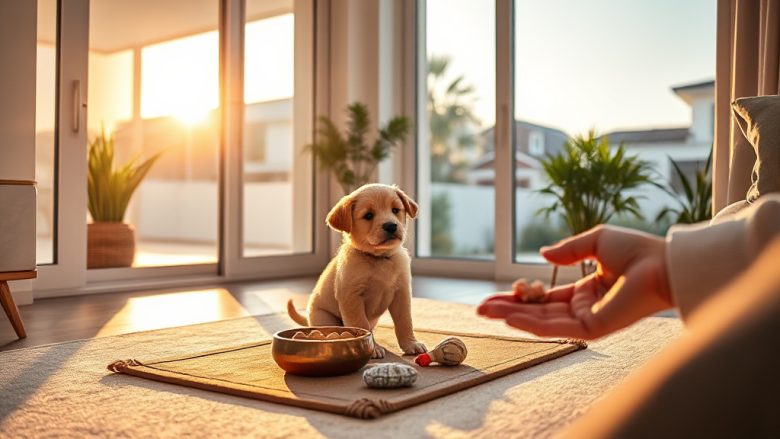
When I brought my puppy home, I had visions of a well-behaved dog trotting beside me on walks. The reality was a tiny land shark who thought my shoelaces were a chew toy. Like many first-time owners, I work from home, so I needed a training plan that fit around meetings, deadlines, and the endless toilet breaks. The good news is that you don’t need hours of free time to train a puppy. You need consistency, patience, and a schedule that works with your day, not against it.
This four-week plan is built around three short training windows each day, none longer than five minutes. Puppies have short attention spans, so brief sessions are far more effective than marathon drills. I scheduled mine right after feeding and toilet breaks, when my puppy was alert but not overexcited. That rhythm kept us both sane. If you’re wondering how to train a puppy at home without losing your mind, this realistic schedule is a solid place to start.
Week 1: Building Trust and Basic Cues
The first week is about establishing a routine and teaching your puppy that you’re the source of good things. Don’t worry about perfect obedience yet. Focus on name recognition, eye contact, and a simple sit. Every session should feel like play, not a test.
Morning session (after breakfast and toilet): Say your puppy’s name in a cheerful tone. When they look at you, mark the moment with a clicker or a cheerful “yes” and give a tiny treat. Repeat five times. Then lure a sit by holding a treat above their nose and moving it slightly back over their head. The moment their bottom hits the floor, mark and reward. Keep it to five reps.
Midday session (after lunch and toilet): Practice name recognition again, but this time in a different room. Puppies generalize slowly, so a new location is a real challenge. Then do three sits. If your puppy loses interest, end the session early. Always finish on a win.
Evening session (before dinner): This is a good time for gentle handling exercises. Touch their paws, ears, and mouth for a second, then reward. This prevents future vet struggles. Follow with a short play session with a tug toy. Play is a reward in itself and builds your bond.
Common mistake in week one: expecting too much too soon. If your puppy doesn’t sit on command by day seven, that’s normal. They’re learning how to learn. Also, avoid repeating cues. Say “sit” once, then wait. If nothing happens, lure them into position. Repeating the word teaches them that it’s background noise.
Week 2: Adding Duration and Distractions
By week two, your puppy should recognize their name and offer a sit fairly reliably in a quiet room. Now you can start adding duration and mild distractions. This is also the week to introduce a release cue like “free” or “okay” so your puppy knows when they’re done.
Morning session: Practice sit with a one-second pause before rewarding. Then say your release cue and toss a treat to the side so they have to get up. This teaches them that the release is part of the game. Do five reps.
Midday session: Add a small distraction. Drop a toy on the floor, then ask for a sit. If your puppy goes for the toy, gently block it and ask again. Reward the sit. Keep sessions short and upbeat. If your puppy is struggling, reduce the distraction.
Evening session: Start teaching a down. Lure from a sit by moving a treat from their nose down to the floor. Mark and reward when their elbows touch. Some puppies get this instantly; others need a few days. Be patient.
Common mistake in week two: adding too many distractions at once. Start with a stationary toy, not a bouncing ball or another dog. Also, don’t forget to reward frequently. Puppies need a high rate of reinforcement when learning new skills.
Week 3: Real-Life Skills and Toilet Training Refinement
Week three is where you start applying cues in real life. Your puppy should be able to sit before meals, before going out the door, and before being picked up. This is also the time to tighten up toilet training. By now, you should have a good idea of your puppy’s schedule.
Morning session: Practice sit and down in the kitchen while you prepare breakfast. Ask for a sit before putting the bowl down. If your puppy jumps up, lift the bowl and wait. This teaches impulse control.
Midday session: Take training outside. Practice loose-leash walking in the garden or hallway. Reward your puppy for staying by your side. If they pull, stop moving until the leash slackens. This is the foundation of polite walking.
Evening session: Work on a reliable recall. Start in a low-distraction room. Say your puppy’s name and “come” in an excited voice, then run backward a few steps. When they reach you, throw a party with treats and praise. Never call your puppy to do something unpleasant, like a bath or nail trim.
Toilet training refinement: Take your puppy out every hour on the hour, plus immediately after waking, eating, drinking, and playing. Reward heavily with treats and praise right after they eliminate outside. If they have an accident inside, don’t scold. Clean it up with an enzymatic cleaner and take them out more frequently. Scolding only teaches them to hide accidents.
Common mistake in week three: letting your puppy off-leash in an unsecured area before recall is reliable. Keep them on a long line until you’re confident. Also, don’t stop rewarding toileting outside just because they’ve had a few good days.
Week 4: Proofing and Building Independence
The final week is about proofing behaviors in different locations and with different distractions. This is also when you can start leaving your puppy alone for short periods, which is crucial if you work from home and need to focus.
Morning session: Practice all known cues in a new room or in the garden. Reward generously. If your puppy struggles, you’ve made it too hard. Go back to an easier version.
Midday session: Work on a “settle” cue. Reward your puppy for lying calmly on a mat while you type or take a call. Start with just a few seconds and build up gradually. This is a game-changer for work-from-home owners.
Evening session: Practice short separations. Put your puppy in a safe space with a chew toy, then step out of the room for a minute. Return before they get anxious. Gradually increase the time. This prevents separation anxiety.
Common mistake in week four: pushing too hard. If your puppy regresses, it’s usually a sign they’re tired, overstimulated, or not ready. Take a step back and make it easier. Training is not linear.
Daily Mini-Sessions and Progress Checklist
The key to this schedule is keeping sessions short and frequent. Three five-minute sessions a day add up to just fifteen minutes. That’s manageable even on a busy workday. Here’s a quick checklist to track your progress by the end of week four:
Your puppy should respond to their name most of the time. They should sit on cue in a quiet environment and hold it for a few seconds. They should be able to down with a lure or hand signal. Toilet training should be mostly reliable if you’ve stuck to a schedule. They should be comfortable being alone for short periods. And they should have a basic recall in low-distraction settings.
If you’re not there yet, don’t worry. Every puppy learns at their own pace. The most important thing is to stay consistent and keep training positive. If you’ve ever felt overwhelmed by how to train a puppy at home, remember that small, daily efforts add up. Your puppy doesn’t need a perfect trainer. They need you, showing up every day with treats and patience.